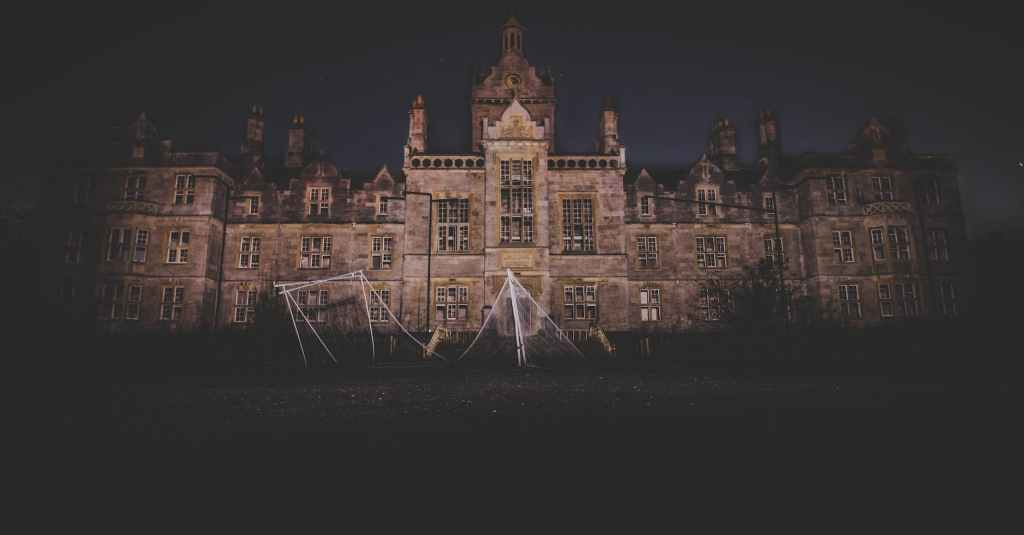
Trigger warning: Abuse, depression, trauma, and suicide
Let me pre-defend my honor here: it’s not a “hot take” because Mike Flanagan has always produced work with subtext. So delving into some symbolism that’s been rolling around in the old dome isn’t exactly a spicy order of papas. But delve we shall! (“We” being me and the people plagued with my existence whom I have bullied into watching The Haunting of Bly Manor).
I’m assuming if you’re here, you’ve watched the show, so we’re not wasting word count on summarizing in this corner of the world. We are investing some word count into accolades though: I friggin loved this series. It had a more whimsical feel than The Haunting of Hill House, paid brilliant homage to its source inspiration The Turn of the Screw, had brilliant casting, and was a well cast narrative. Throw in one of the most wholesome lesbian romances modern media has to offer, then finish it off with tragedy that is still somehow heartwarming. The tragedy is where this thought of mine begins.
I’ve seen extensive commentary and essays about The Haunting of Hill House being a portrayal of grief and the grieving process. I was thinking of Bly Manor from this lens of greater emotional commentary, and it occurred to me that Bly could be seen as a commentary on trauma.
To set the scene:
The Lady of the Lake — I’m going to classify her as “generational trauma”. I think she works in this as a manifestation of an uncontrollable environment that is cyclical in nature (i.e. she walks the same path every night), unforgiving, and relentless.
Peter Quint — He is a ground zero case for trauma surrounding poverty, parental manipulation and abuse.
Rebecca Jessel — Rebecca is a complicated case as both a victim of domestic violence, and for a good part of Bly an enabler. She is a manifestation of trauma and trauma perpetuation, eventually reaching a catharsis of breaking the cycle by defending her wards.
The characters that are actively dealing with the set up are Flora and Miles, and eventually their caretaker Dani. Quint and Jessel’s periodic possession of the children is representative of childhood behavior in response to trauma. These symptoms of “acting out” are common for those who have suffered loss and hardship at a young age. The ultimate gambit to possess the children is symbolic of this negative trauma response being codified in Flora’s and Miles’ behavior–i.e. victims who become abusers or addicts as a means to cope with their trauma. This can also be viewed as a type of dissociation as the children are trying to reunite with their parents via their own memories, thus disconnecting from their own lives.
While they overcome this obstacle, Flora is nearly drown by The Lady in the Lake. In order to save her, Dani dives in, and takes The Lady of the Lake into her own psyche. Dani lives a fulfilling life, but The Lady of the Lake haunts her, eventually drowning Dani in the lake. This sequence for me is representative of Dani taking on the brunt of trauma to spare Flora. This situation is common enough in abusive households with siblings. Oftentimes older siblings will act defensively, sparing their siblings the worst of the abuse but taking on more of it themselves in the process. Here, Dani takes on the brunt of the trauma in order to defend Flora, but is haunted by depression and suicidal ideation. This eventually overcomes her, and she ultimately ends her own life–i.e. walking into the lake. I find this aspect particularly meaningful. Flanagan portrays mental health as an external struggle that operates alongside a life full of love, hope, and meaningful connection. This also captures the struggle of those close to persons struggling with trauma and depression, as Jamie tries desperately to save Dani, but is ultimately unable to overcome her inner demons.
This interpretation is finished with the fact that Flora and Miles don’t recall the events even though they were deeply involved with them. Is this dissociative amnesia, or proof that they were spared the burdens of their traumatic circumstances? Who is to say? It is, at least, a happy ending in a tale of trauma, woe, and horror.
Hats off, as always, to Mr. Flanagan.

 Obi Yonder
Leave a comment